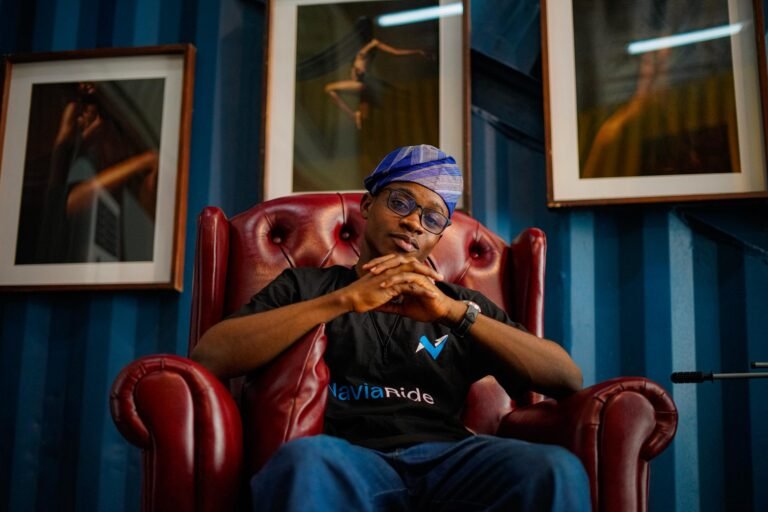

The entire team was waiting on my game. We were on the verge of winning the silver medal at the National Sports Festival. I had won a lot of medals with a lot of words, but this one was different. One of my teammates had just lost at his table, and so for me, I had to win. Throughout the game, I was trailing behind, and if I ever needed the right word, now was the time. I played the word “Nebbish”, and I was back in the game. I could see there were three moves left to the end of the game, and so I needed to think of something. I added an ‘e’ to this word that I had played, and played it again. In playing Scrabble, you don’t have to know the meanings of the words; you just have to know the word exists.
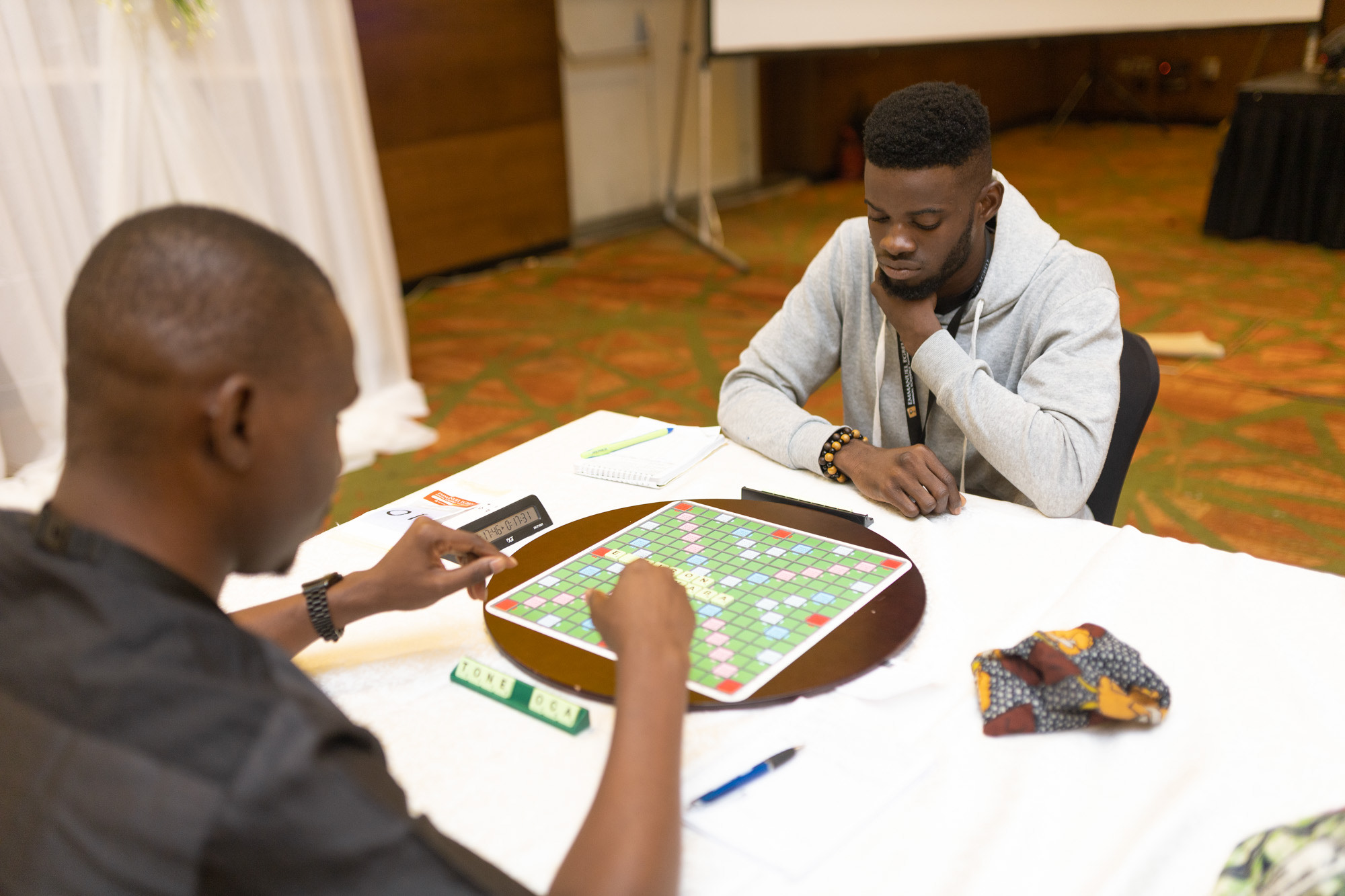
I got introduced to Scrabble two weeks before a competition in Secondary School. The principal had received a memo from the educational district about the Scrabble competition coming up. He remembered that as a young person, he used to play the game. With little time on his hands, he brought together students he thought could learn fast and said, “I’m going to show you guys something. There’s a competition coming up. I want you guys to try it out”.
And so we began preparing. In those two weeks, we made a lot of improvements. Getting to the tournament, we made it to the top 40. Unfortunately, we didn’t make the top 20. For students who were learning Scrabble two weeks before a competition, I thought that was quite impressive. Even though we felt bad, we knew we had something and then in the next edition, we won it.

This is the story of the game that would take me around the world and eventually make me the 14th African Scrabble Champion.
Transitioning from playing Scrabble in school competitions to playing professionally was not straightforward. It wasn’t like football either, where the link from the academy to the national team required God to help you. Scrabble has structure. There is a path, even if you have to find it yourself. A lot of senior players and coaches who had seen us play in these school competitions adopted us, and that made the transition easy. They invited us to the Scrabble clubs and started sponsoring us to national tournaments, “just come with your bag. We’ll pay for your transport, pay for your accommodation and food”.
The idea was to get us to keep showing up and playing, for people to see how good we were. There are a lot of Scrabble tournaments, and this is accompanied by a rating system. The top players from the rating are usually invited to national camps to represent the country. The first time I represented the country, it wasn’t because of my ratings, but there was a slot for the best youth player, and that was how I made the team. My first two outings, in Ghana and then India, where I represented the country, I went as the best youth player. I also became the highest performing Nigerian at the World Championships. From then, they began to say “this one is not a baby again o”. The key was that I kept showing up. I knew if I didn’t get on the team based on my ratings, I could be invited as a wild card or top-performing player.
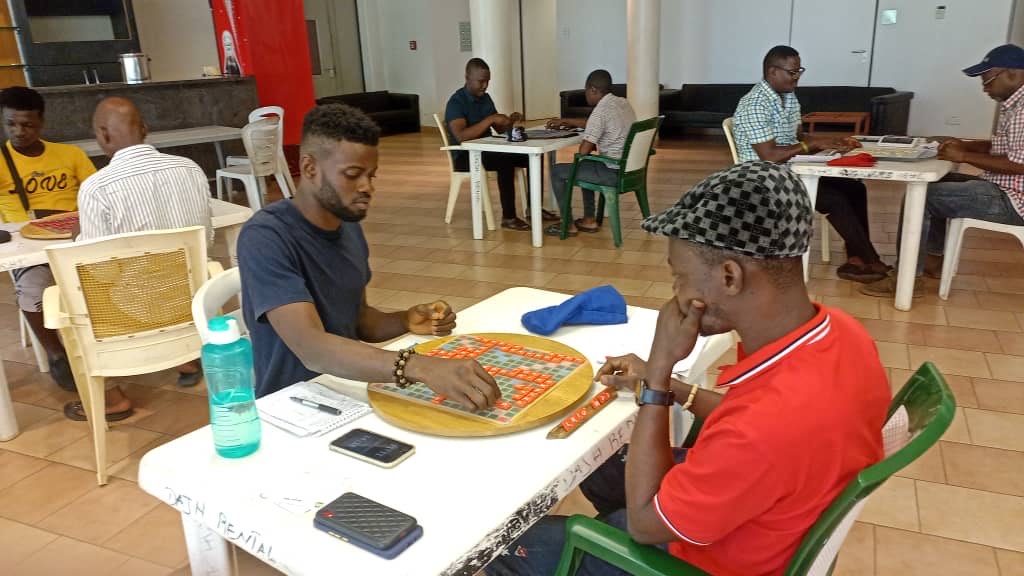
Lagos is the most active playing centre in Nigeria. There is always an event that has Scrabblers gathering almost every weekend. Whether it’s someone’s birthday and they decide to host a mini-tournament, the Nigerian Sports Festival, National Championships, Club Championships, etc. All year round, there were always events that kept us busy playing Scrabble. I showed up, weekend after weekend.
I owe a lot of my competitive nature to Scrabble. Right from primary school, I had always been in tough classes. The times when we were given grades and then positions, I’d always come second, third or fourth. The first time I came first in primary school, it was like a miracle. Even though I had always wanted to do better academically, I was not too pressured in that aspect. But when I started playing Scrabble, something changed. I realised that I wanted to be better than the next person. Not in an unhealthy way where you want to be better and put them down, but you want them to bring their best while you still want your best to triumph.
When you play Scrabble at the top level, you expect your opponent to bring their best. Scrabble has to do with words, so a lot of the top players know all or almost all the two to eight-letter words in the English Language. You have to know it, not just memorise it, but to the point where when you are given a set of letters that are scattered, you can immediately spot that the word is there. Whether it is a seven, eight or five-letter word, you have to be precise and sharp. At the top level, going against someone who is that sharp requires that you then have a strategy in place.
I’ve been on the written log as the highest rated Nigerian in Scrabble for a while before I was dethroned. You can call it a former Nigerian number one. As you win each game, you gain points and go up in the ratings. If someone else wins the next tournament, they take over as
they get rated higher. I also co-captained the Nigerian team to the World Championship in the USA in 2023, and I captained the team to the African championship in Rwanda last year.
Scrabble makes you a very detailed person. For example, there are a lot of words some people confuse with each other, and they might not know. Instant messages and social media contribute to that, but someone who plays Scrabble will easily notice. Games like Scrabble and Chess make you detailed down to the letter. You have to know what you are doing and can’t afford to be absent-minded. This is particularly important for kids.
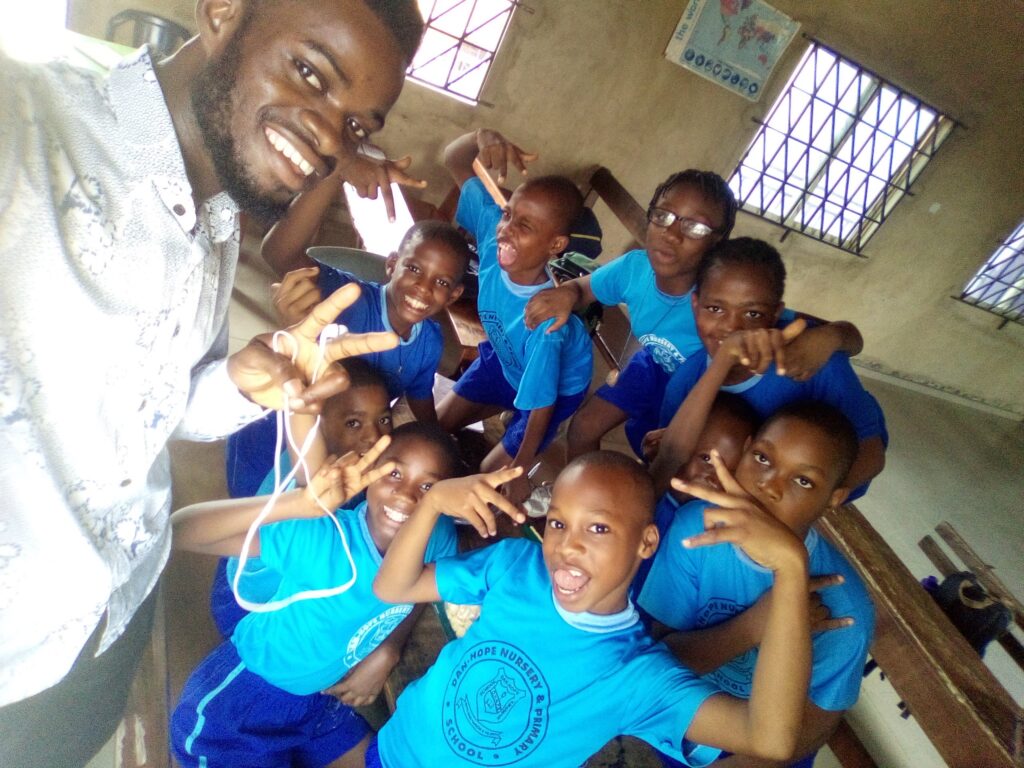
There are a lot of Scrabble school programs in the country, and I used to teach in some of them before I entered the university and got busy. I have seen how impactful it is. When we do the introductory Scrabble classes, we tell the student, “Scrabble helps your mind”. Sometimes it feels like we are reciting a phrase until the program starts and the impact begins to show. I have seen students doing poorly and below average who, when they start spelling and actively counting their scores, improve academically. There’s also the independence it gives the child. The child has his own rack, and nobody is coming to help them. The child is on his own, no daddy, mummy or uncle to help. They have to make decisions, count scores, think and come up with their own solutions. This makes them independent, and students doing poorly start improving, especially in Maths and English.
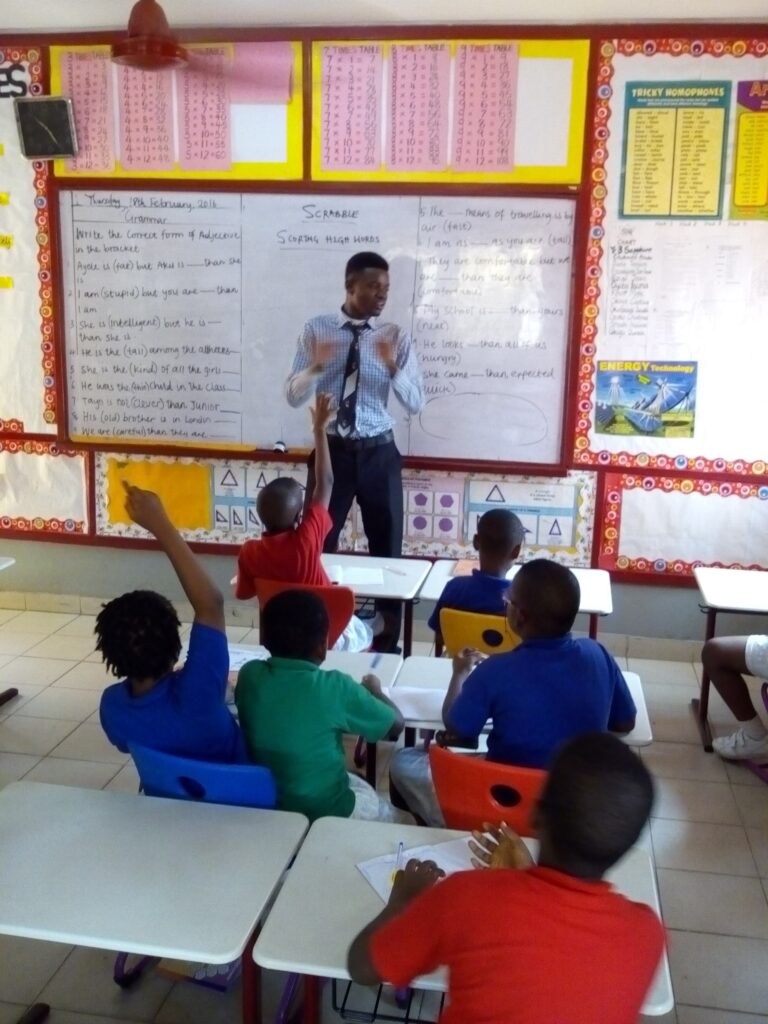
When they get better, they start playing close-end games where you can track. For example, if my opponent plays this word, that is 14. If I play a word that scores 21, that is minus 14, meaning I can win with 7. This kind of maths for young children turned out to be really good. I have seen this over the years, and it is highly recommended.
Before the African championship, I had done my studies and had been practising. I sought advice from the past champions, and the immediate past champion said to me, “You have to trust God, and you have to trust yourself”. This gave me a new perspective because you can be putting in all the work and still not believe in yourself. Especially in the finals, not believing in yourself can lead to making a lot of errors. This is what competitiveness is to me: believing in yourself. Believing I can achieve a high level of precision, place my moves side by side with the best computers and still have an 80-90% accuracy. I have always and till today still study how the 1% do their stuff and do it naturally. It programs my mind to think that this level is attainable. The top players in Scrabble know all the two to eight-letter words, which is over 40,000. A lot of studying is involved, but there are also patterns we use to learn them.
When younger players ask me how to study, I let them know there is a way the words are structured. You learn the easy ones first and then progress to learning the hard ones. You could easily swallow up a hundred words a day, and it won’t look like you did because there are fun ways to study them. The most cumbersome parts, the ones difficult to study, are the shorter words because there are no shortcuts. You have to memorise them. The longer seven or eight-letter words have shortcuts to learn them, and that makes it fun.
When I won the African Championship, for a moment I felt like I was not in touch with reality because I had beaten the most in-form player at the tournament to win. He was the only world champion from Africa, and I beat him by 1 point. We had both scored over 400 points. At that level, we both knew almost all the two to eight-letter words and could both spot patterns instantly. When strategy is perfectly matched against strategy, it comes down to the smallest of margins. While the game was wrapping up, I thought maybe I had made an error or something. I went to confirm, and he shook my hand “Congratulations”. It still felt unreal. He had won every tournament in the country that year, and now he came second, by a one-point margin!
I was still a student at the University of Lagos, studying Health Education. People knew me for playing the drums in school, the drummer guy. After winning the Championship, a lot of my classmates began seeing me on TV and sometimes journalists came into the school to interview me. Scrabble became the most pronounced area of my life. The Lagos State Scrabble Association did a little reception for me, and while this was going on, the state governor walked in. “This is the current African Scrabble Champion”, they said to him. He looked at me with a warm smile and shook my hand. This was a proud moment for me.
An even higher level of pride was when I got to captain the Nigerian team. I was given the assistant captain position at first. I thought to myself “do these people know what they are doing?” Because why are they making me an assistant captain? Soon enough, I realized that the captainship is service. You are not a boss to anyone. They had always seen that I was willing to help everybody and communicate well with the other players. Then last year, I was made captain of the team for the African Championship in Rwanda. I was reluctant because I felt like being the top player in the field doesn’t mean you should be captain most times. But my service to the team was evident. We didn’t win the tournament, and I also did not defend my African Championship. Initially, it wasn’t a pleasant feeling for me until someone said to me, “You know, whoever won a trophy on the team, it is still yours because you are the father of the team. It is still your pride”. After that, I thought to myself, this is true. It is actually a big thing to captain a team, especially a winning team.
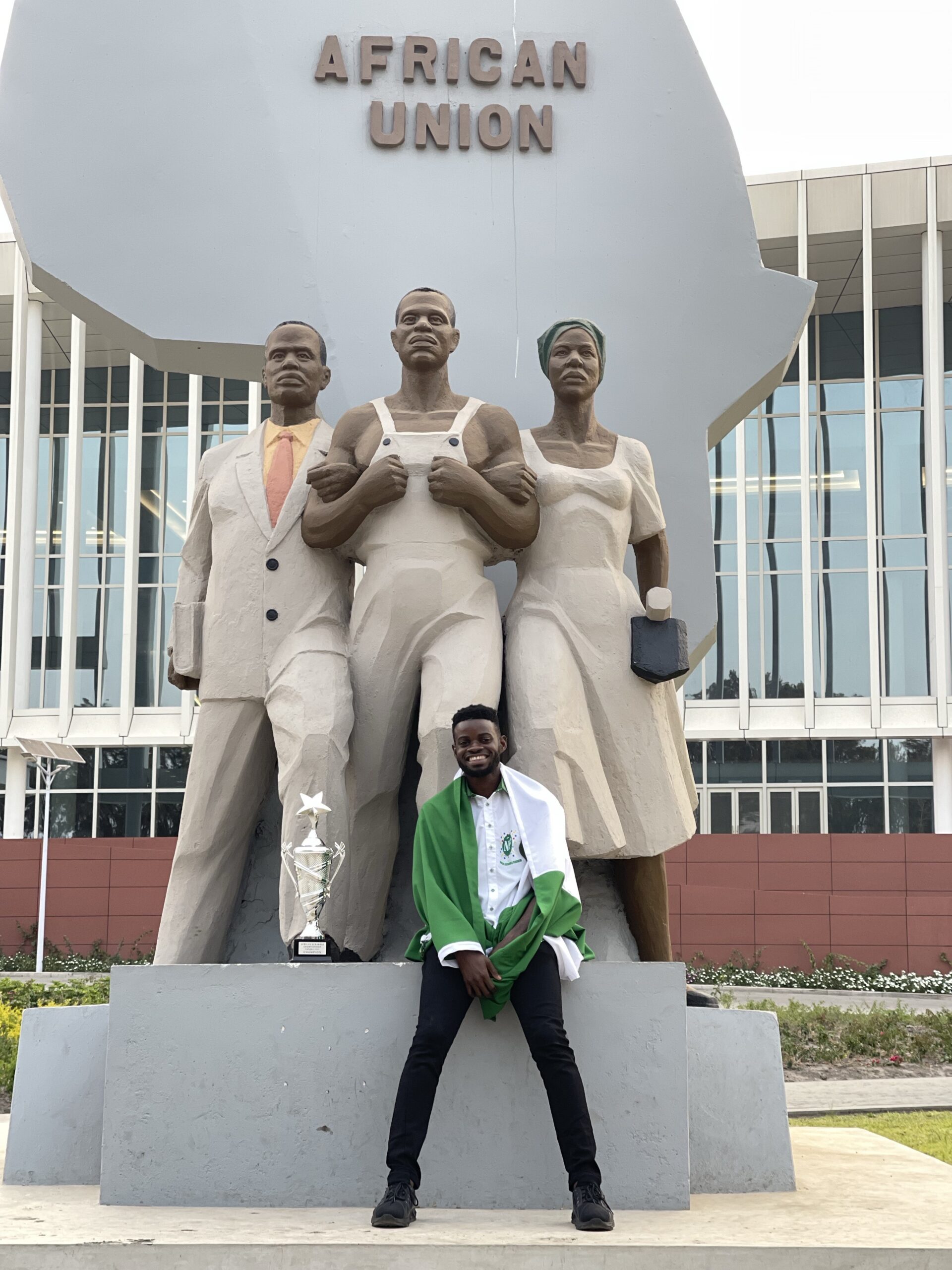
Currently, Nigeria is viewed as one of the best Scrabble-playing nations in the world. There’s a YouTube documentary by an American Scrabbler, Will Anderson, titled “The Stunning Rise Of Scrabble’s Strongest Nation”. Another content creator, “Nas Daily”, created some content about Nigeria being “the Country of Scrabble” and in the comments people were like “is it this same Nigeria?” “Is this a joke? This is either wrong or it’s fake news”. It shows a lot of Nigerians don’t know how much of a scrabble nation we are. 15 African Scrabble Championships have been held, and Nigeria has conquered the continent, winning the most Championships. Three Nigerians have won it multiple times, and I won the 14th one in Lusaka, Zambia. In the year 2025, we won the title for the World’s Best Scrabble team. To retain that, we need a lot of new players to come into the scene because a lot of the top players we have will not always play as they have gotten busy with life.
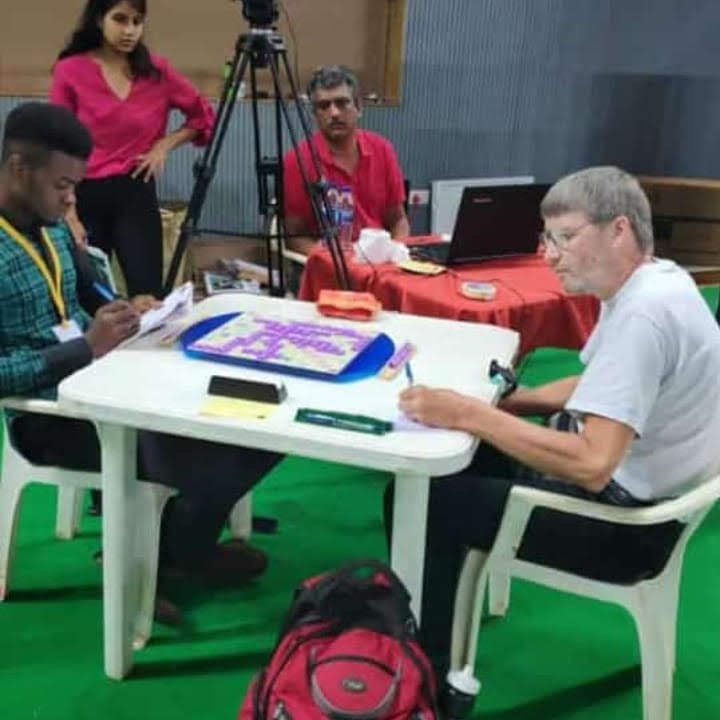
But still, some people don’t even know that Scrabble is a professional sport in Nigeria. The government needs to do more in this respect. When we ask for government sponsorships, you hear things like “do you want me to tell Nigerians that we take the money we are supposed to use and sponsor footballers to give to Scrabblers?”. So most of the time, the senior players and private sponsors sponsor the team to these championships. That’s how Nigeria has maintained its dominance.
Hopefully, one day, Scrabble will get enough recognition and endorsement from the government, but for now, we just keep at it.