Recently, I had an interview on a radio station in Ireland. It’s one of those interviews where you have to send them a piece of art, media or culture to study beforehand and when you come, you’d talk about it with the host. I sent them an MI Abaga mixtape, Illegal Music 3. I spent like two hours talking to them about MI and his discography. His penmanship and his poetry. One of the people I was talking to on this radio show was a famous Irish author and at the end, we all agreed on one thing. If MI wasn’t a Nigerian, he would have a Pulitzer.
This was important for me because today, I am a poet because of him.
I grew up in Lagos, in Surulere. At a time when community was important. Our Saturdays began in motion, as there was always someone’s house to be at. You wake up at 9 or 10, and the boys are already there. We always had something to do together but at that time, creativity wasn’t a thing. I had no language for poetry. If you had asked me to define a poem then, I don’t think I would have been able to. The only poetry I had read was maybe the literature I did in English class. It doesn’t stand out, but there is a chance I read some. We never talked poetry or even knew what poetry was to a certain degree.
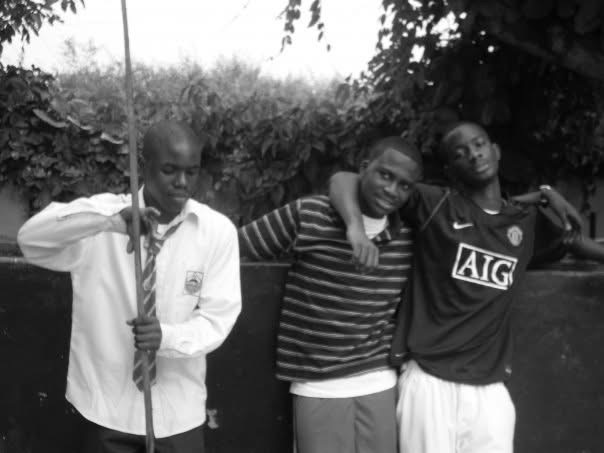
The only art I consumed at the time was music which was done communally like the time the new MI track was playing while the boys were chilling.
I had gone to a party at a family friend’s place and I heard Anoti.
“Who is this guy?”
I remember I went looking for the album four or five days in a row at the CD sellers in Masha. Each time, it was sold out.
“Who is this guy?” I muttered to myself.
When I finally found it, I didn’t just listen. I absorbed it. I started rapping, me and my boys, doing it in full Queen’s English just like MI did. We recorded tracks, shot videos with subtitles, had Temi do a hook for us on a song, and performed in schools. All of this is still on Facebook somewhere.
In 2010, I left Nigeria and landed in a small town in rural Ireland for a year-long entry programme. I wanted to keep doing the music so I was sending rap verses back home to the boys in Lagos. But soon, the energy started dying and it was just me and the verses. When I moved to the university proper, I discovered spoken word poetry online. It was really popping around that time so I thought:
“Oh, these verses work as poems!”
I also started writing love poems for girls. The transition was straight, finding MI to being a part of the rap group to moving and still writing rap verses. These verses automatically became poems and I started submitting to different journals, writing online to get published. The people reading my stuff were like:
“Oh my God, this is amazing!”
Between 2009 and 2014 when I left the university, I was finding my voice, my technique, my style. Those years shaped everything about who I am today as a writer.
What I would call my first poem, not the one I say when I do interviews, but the one I actually sat down to write, was probably in 2011. The first two lines came to me, and I was like ‘I like where this is going.’ It was a poem about the moon and beauty, so I posted it on a site called Tumblr. A lot of the things I wrote, I just showed to my friends to be honest or people I was close to or in the same vicinity with. They really liked it. This was surprising because when you show people that you are doing something artistic or creative, especially a group of students trying to pass exams, they don’t really care. Like why are you showing me poetry? But I actually caught their attention and a solid shout out to them. They cared and asked me to write more.
Throughout my college years from 2011 to 2015 in Cork, I did a lot of writing. My undergraduate course was weird in that it required a compulsory one-year master’s program after the normal four years. I did the four years in Cork which is like South Ireland, then I moved to Dublin for the compulsory one year masters. I wasn’t writing for that one year in Dublin. Immediately I finished, and got registered as a Pharmacist, I began working. One of the very first things I did was to look for an open mic around. I remember the Sunday I found one and went there. I was terrified.
There must have been like 100 people there because it was a popular one. I thought to myself: ‘What am I doing?’ It wasn’t an open mic actually, it was a competition. A poetry slam. I was eagerly waiting for that whole year to do poetry and then the Slam was the first thing I did. I did my poem and came second. And I was like:
“Hold up, wait a minute, I’m the shit!”
That whole year was a lot of writing, and performing. I won a couple of slams and they had the grand Slam at the end of that year. This grand slam was like the winners of all the slams that year slamming against each other. I won that one as well. That was the final confirmation that okay, this is where my skills lie.
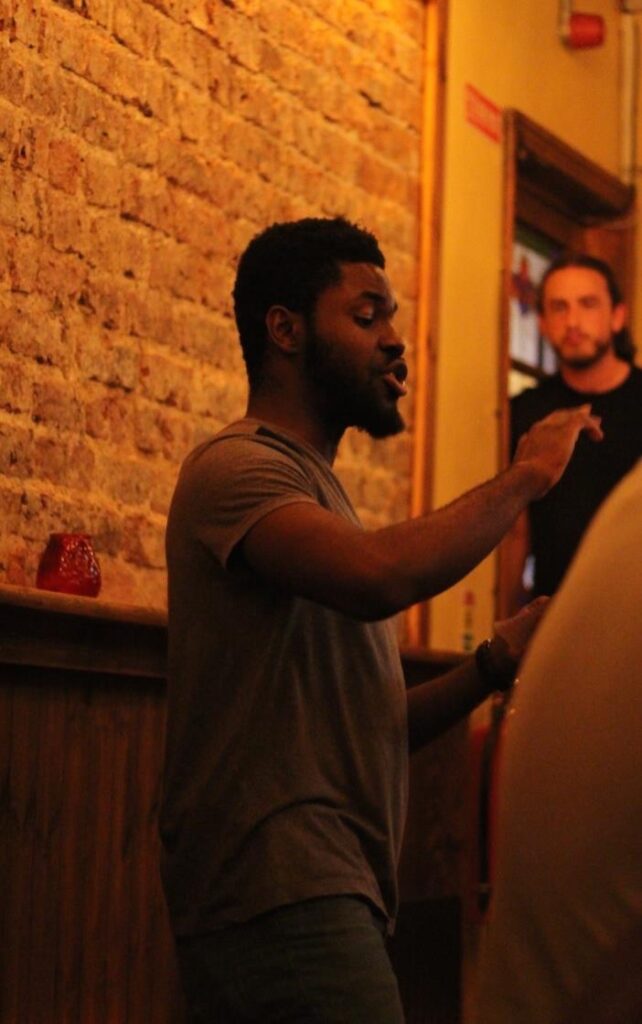
Sometime at the end of that year, people started messaging me about events, wanting me to come perform. Most of it was for free, I wasn’t thinking about money. I didn’t even know you can make money as a poet or performer. The first time I was offered 50 euros, I said to myself:
“You want to give me 50 euros to just come and say my poem for three minutes?”
It sounded crazy to me. Slowly I stopped entering the competitive slams because I was just going to win everything I got into. I started pricing myself better, stopped performing for less than 100 euros and negotiating better. Then 2016 I had my first show, then we did Dublin Fringe Festival in 2018, which was kind of like the ‘tada! We are here!’ moment. We sold out the entire run of a week of shows, and got nominated for an award, all that kind of stuff.
I met Feli at an open mic. I saw them perform and was like ‘you’re the real deal as well.’ And so we met up at a cafe, and spent like 6 hours just chatting. We bonded from the first moment and the entire career kicked off. People started wanting me to do more things. I was also intentional and ambitious, the obvious Nigerian mentality. But I was still working as a pharmacist.
From 2018 to 2023 was like a five-year run of growing each year. I think my gig fee at the end of 2023 was probably like 350 pounds if you wanted me to come perform. My workshop fee was around the same although I wasn’t in that many workshops at that time to be honest. We had also started the company, WeAreGriot, and were doing things already. But then in 2024, out of nowhere, three things happened that changed everything.
The first was this thing called Other Voices, which is a huge platform for predominantly musicians. It’s like a concert, but it’s a brand. It’s a weekend of shows at a really nice location and people pay hundreds of euros to go there. It’s almost like a mini Coachella kind of vibe. They were having a special anniversary edition at the Guinness Storehouse to kickoff the one that was coming in a few weeks. The producer DM’d me that she had seen my work online and wanted me to perform. I couldn’t believe it.
I also got another DM from the producer of this popular TV show called the Tommy Tiernan Show. Tommy Tiernan is one of the famous Irish comedians and personalities and so his shows get millions of viewers every two Thursday nights. I got the DM that they wanted me on the show and I was like:
“That’s crazy.”
At first I thought they wanted me to do a poem during the interlude but then she asked me about myself and we got chatting then she said ‘I actually want Tommy to interview you.’ I thought to myself in disbelief:
“What do you mean you want Tommy to interview me?”
The episode aired in March, around my birthday and around St. Patrick’s Day as well. St. Patrick’s Festival is the most famous Irish Festival in which I also did a big show. So basically there was a six-month period where I was stratospheric, from September 2023 to March 2024. It was insane! My son Asher was born as well.
Before any of these had happened, I had discussed with my friend Feli that I wanted to leave my job in pharmacy and give my art a try. We were still having the conversations when all these things started to happen and I was like ‘obviously, now I have to leave.’ My emails and phone were literally blowing up. So I left my job in April 2024 to pursue my art full time and yeah, I have been out here the last two years.
I’m the CEO of We Are Griot, but also the creative director of this new company that I started, Belema Art House. I direct plays, films, and live experiences in general. I also do a lot of workshops for kids, designing programs to help their creative development. Yeah, just coming up with anything that has to involve writing or coming up with creative ideas around stories and storytelling. I am, in the most Nigerian sense of the word, operating.
My plays are always Nigerian so far. The first play, Boy Child, was set in Lagos. It’s about Akanbi who lost his dad and is exploring masculinity in close relation with the female figures in his life; his mother, sister and his girlfriend/wife. The second play, Mmanwu, was set in Onitsha. The new one I just wrote, Palm Fist, is also set in Lagos. A play I am ruminating on now is set in Ireland, but it centers on two Nigerian immigrants in an international protection centre. So culturally, it is still quite Nigerian in its setting, both the main characters and the people surrounding it.
The whiteness or Irishness in my work is quite external to the plot or the setting. It doesn’t influence my art. The choices I make are intentional in that I want to write for the Nigerians or Africans here. And if you don’t come to see it because it’s Nigerian, then it wasn’t for you in the first place. But for white people who are curious about other cultures, here it is at your front door, come see it.
When I close my eyes and think of words and stories, I don’t see white people. Even when my characters are not in Nigeria or Africa, they are usually Nigerian or African. Whiteness is usually an external force, good or bad, somewhere in the middle, but always external. I’m not trying to hold on to it so dearly. I just let myself write and that’s what I see, and that’s what comes out. I don’t see that changing.
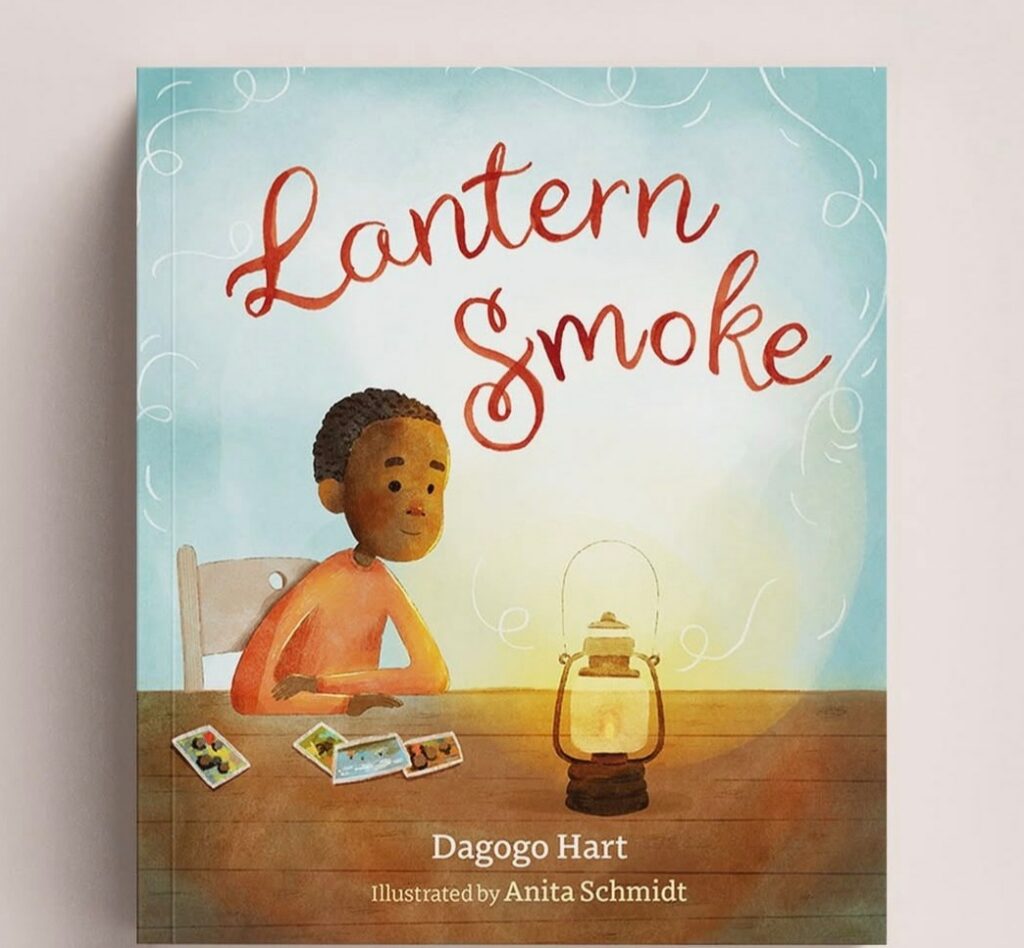
I wrote a children’s book, Lantern Smoke, for Asher, who is growing up in the Irish Midlands, in a town of forty or fifty thousand people. It’s quite rural in the sense that there are farms everywhere but there are now estates popping up everywhere. The estate I live in, it’s mostly immigrants; Indian, Nigerian, Pakistani. But the schools for example are still quite Irish, and going out to the shop and stuff shows how different you are. The book was a way of saying to Asher: you are normal, you are here, you belong. The people who bought it were predominantly black parents buying it for their black kids. Some white people bought it but the messages I got from the black parents showed it meant something to them.
Being a minority of any kind is an impossible task. For example, being Igbo in the North, being Black in a predominantly white country especially if you live in a rural area. What helps to an extent, I don’t know how large or small, is seeing yourself in all forms of media. Films, sports, books, on stage, because the media always feels like the representation of the general populace. So if I am watching a movie, and I see a Nigerian person or character in the movie, I’m always more affiliated with that movie.
I was a Chelsea football club fan growing up and when people ask me who’s your favorite player? I say it’s John Mikel Obi. They don’t understand it, they say he was mid, probably true. But Mikel was Nigerian. I don’t know what that did for me, but 10 years at the club and a banner of him still hanging at Stamford Bridge, means a lot to me. There is this extra oomph, this extra solidity that comes from seeing people who look like you claim space in the world.
I’ve been in Ireland since 2010 and only applied for an Irish passport last year. Two reasons why it took so long: I never felt Irish and I felt too Nigerian. And so for me, applying for the passport was symbolic. It was the final nail in the coffin of my relationship with Nigeria. It was the final ‘I’m dusting my hands off this country.’ Not that anyone was going to stop me from moving back even if I had the passport, but it was symbolic for me in that sense. After Asher was born with an Irish passport and after buying a house, I just thought, what am I doing? Might as well just get the Irish passport.
Nigeria is an interesting beast. Up until like 2018, 2019 I was still going to come back. I was trying to open a pharmacy in Nigeria. For almost like two years, it was a struggle until I finally gave up on the whole thing. The thing that gave the most hassle was the Pharmaceutical Society of Nigeria. There is a systemic issue with most Nigerian institutions. Obviously there are written rules and guidelines for how things should be done but if the general knowledge is: ‘You have to pay us and settle us for us to make this thing possible, else we are going to give you so much hassle. The people you are going to be competing with, we are already on their payroll and they don’t want new pharmacies opening.’ It was extremely difficult, probably still is, I don’t know. I gave up and was like: ‘What is this stress? My life is okay in Ireland. I don’t need this stress.’
The ambition of the average Nigerian is a trauma response. I believe that. But they are the product of the system and structures. It’s the reason why if you go to certain places in Nigeria where they are kind of detached from the macro of Nigeria, they have this microcosm of jobs, healthcare and things like that in place.
When I was much younger, I used to go to Bonny Island as a child at least twice a year, summer and Christmas. It felt different from the rest of Nigeria. People felt happier, and they were more neighbourly. They had the basics; people weren’t going hungry, they weren’t worried so much about healthcare, electricity was constant and you didn’t have to chase. You didn’t have to be overly ambitious. And I remember thinking: this is what it looks like when people have their basics met. That feeling never left me. It shaped how I think about systems, about what people become when structures fail them or hold them up.
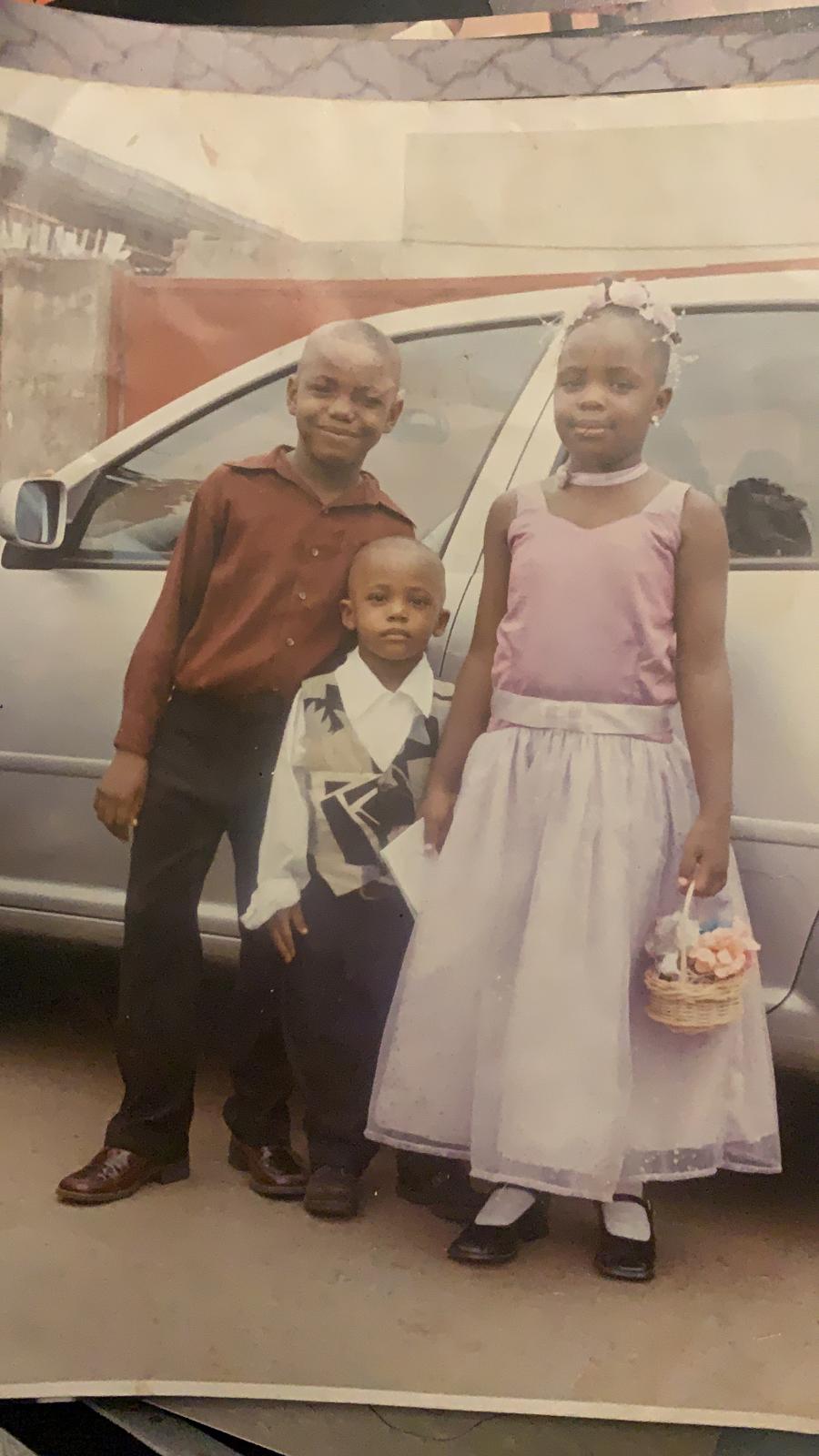
But Nigeria has not left the work I do. It hasn’t left the community around me either. My wedding had just Africans. Almost no white faces. Even now, in the Midlands, I have enough Nigerians around me to make a community. I am quite intentional about it, not just because we’re Nigerians, but the gravity of where you come from, of how you came up, is not something you logic your way out of.
And somewhere, in all of this, there is still the boy who went four or five times to the CD sellers in Masha, asking for the MI album, being told each time it was sold out.
Who is this guy? I asked.
I found out. And in finding out, I found myself.
A poem by Dagogo Hart “Things I will always be”
I will always be words. I will always be rope, both noose and harness. I will always be words, jumbled up alphabets to break spirits and raise men. I will always be flesh, I will always be too man to cry but just man enough to fail. I will always be tears, I will always be too much pain to be anything other than mortal. I will always be man, too much ego but just enough sense to know I need a woman to tell me when enough is enough. I will always be my mother’s prayers and my father’s son. I will always be my brother’s keeper and my sister’s friend.