I still remember the day my dad got me my first computer. I had just started junior secondary school. He brought it home, gave it to me and didn’t really say anything. He just let me sit with it. So I did the only thing a kid left alone with a machine would do. I opened Mavis Beacon and typed the same lines over and over. I wasn’t really learning how to type. I was trying to understand how the thing worked.
A little later, during the long third-term break, my parents signed me up for a computer summer program instead of staying at home to watch movies like most of my friends. I learnt graphics design there. It didn’t look like the beginning of anything, but it was.
I was also fascinated with cars and wanted to study Automobile Engineering when I got into the university. This was the plan. So after I was done with secondary school, I followed through with it. But “Nigeria happened.” My admission set got merged with another set, this disruption meant I wasn’t going to get the offer. My parents had always fancied me studying something related to computers, and my dad had already put one in my hands years before either of us knew why. So somewhere inside that disruption, without me actually choosing it, the plan changed.
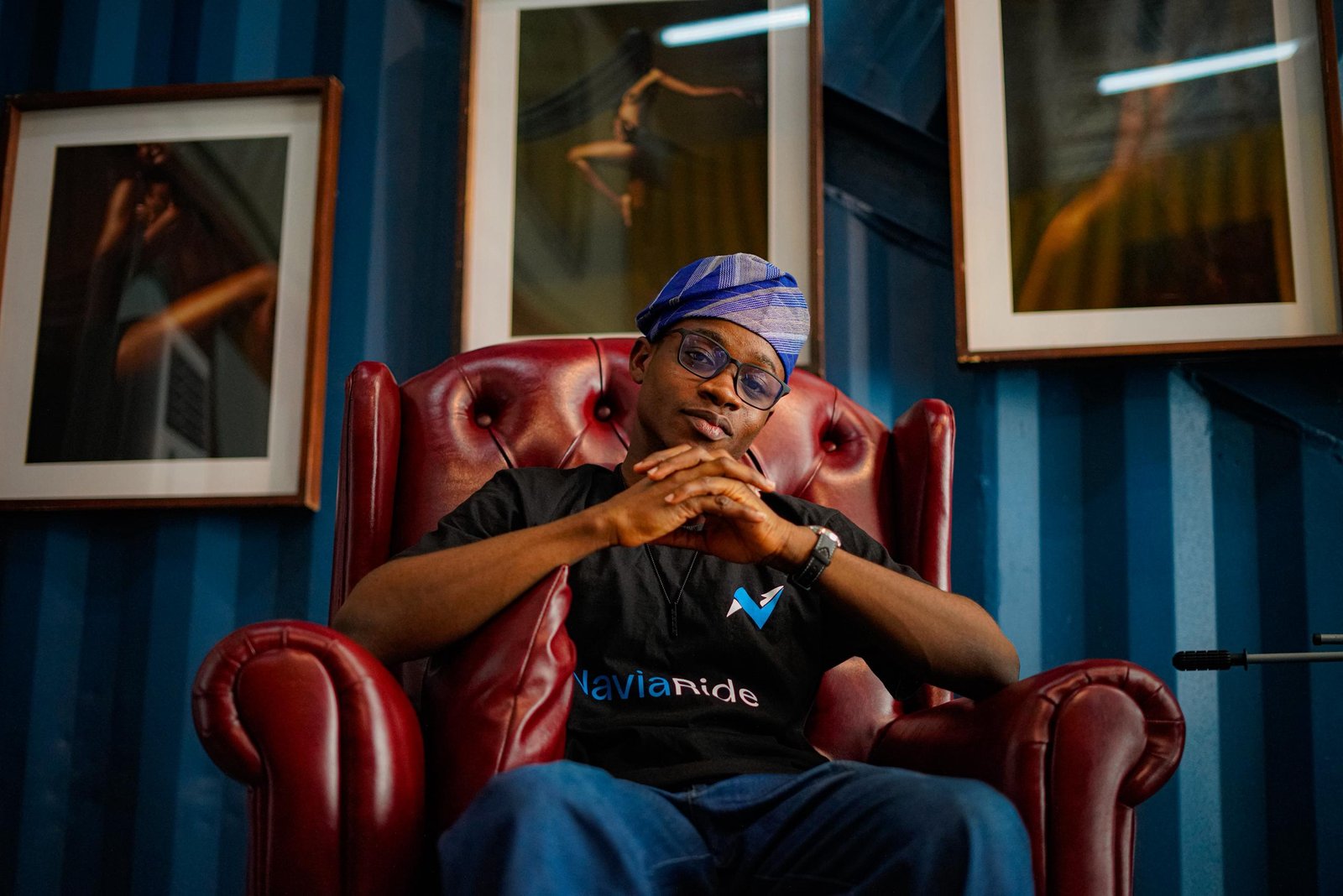
Being a changemaker means everything I try to do, I make sure it affects people positively, that it shifts something. I have been on a mission to do that in two ways. One is NaviaRide which is trying to fix how people move. The other is Reloop AI, which is trying to fix what we do with our waste. Both of these affect all of us.
I was a kid who grew up noticing things other people had stopped noticing. Nobody talked about fintechs when I was that kid, but by the time I moved from just doing graphics to being in tech properly, everybody was. Every direction I looked, someone was building another fintech application. All that skill, all that funding flowed in that one direction, to solve the same problem. And I kept thinking, who is solving for everything else?
I saw on social media that a girl got into a stranger’s car returning home on her sister’s birthday. It should have been a good day, a day of celebration. Instead it turned into tragedy for her. She was touched inappropriately and robbed, in a car she only got into because there was no safer way home that night. It’s arguable as to whether this was the best decision but at the time, it was her only option. It’s not a rare story. Also a colleague of mine in Abuja had his phone and money taken. He was forced to transfer everything he had. It trends on TikTok every other week, it’s called “one chance”. Nowhere in Nigeria do you get into a stranger’s car and feel completely safe. You just pray and hope.
This problem found me, I wasn’t looking for a market gap. I watched a fear that people had learned to live inside of, one I’d eventually have to design around. NaviaRide was my solution to address it.
Whenever you are building anything, you’re taught to think in best and worst case scenarios. I always joke that in Nigeria, you need to consider the “Nigeria case,” because you can’t build like you are operating in a system where everybody plays fair. There’s always a factor you have to plan for that nobody puts in the textbook.
Building NaviaRide wasn’t the original plan.
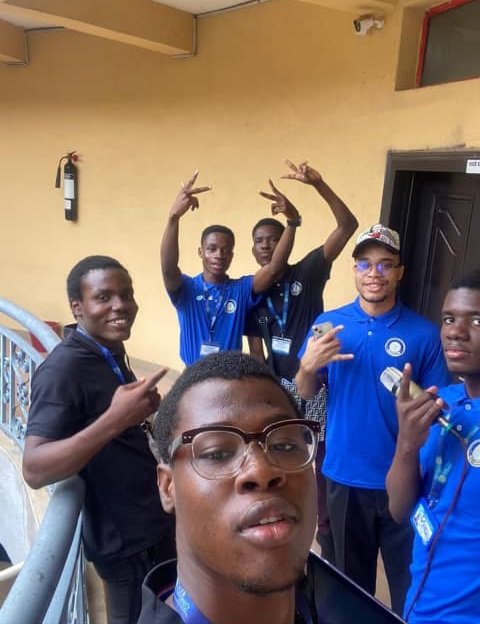
In university, I became the pioneer Robotics lead of my school’s Google Developer Student Club (GDSC). It’s now called GDG. That started almost by accident. We had gone to represent my school at a Zenith Bank Tech Exhibition in November 2022, where we met a group of students from Covenant University. They asked us a simple question “do you have a GDSC on your campus?”
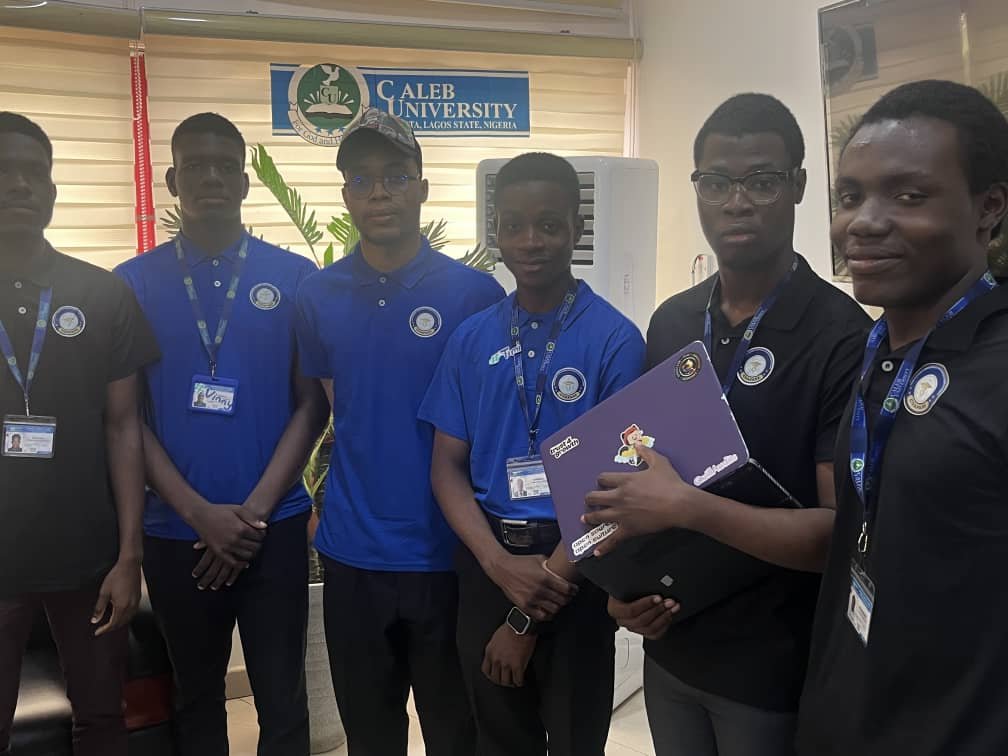
We didn’t. We only had a coding club, and coding isn’t the whole of tech. There are designers, video editors, and everyone else. One of the people I met that day, who later became my co-founder at NaviaRide, was Chidozie Green. He was the one who after the exhibition pitched the GDSC to another student on campus and said, “why can’t we have something like this on campus?” So we decided to build it.
By 2023, I was out of school for months doing my industrial training at a tech firm in Ikeja. That’s where I actually learned what commuting in this country costs a person. There were evenings when the BRT queues were so long, and so few buses came. Grown professionals in suits were pushing each other just to get on, like it was a wrestling match. Meanwhile private car owners drove past, empty seats and all, headed the same direction as everyone standing there. Fuel subsidy removal made it worse. I watched it happen most nights for months. I wasn’t sure what to do, but I always thought about this problem
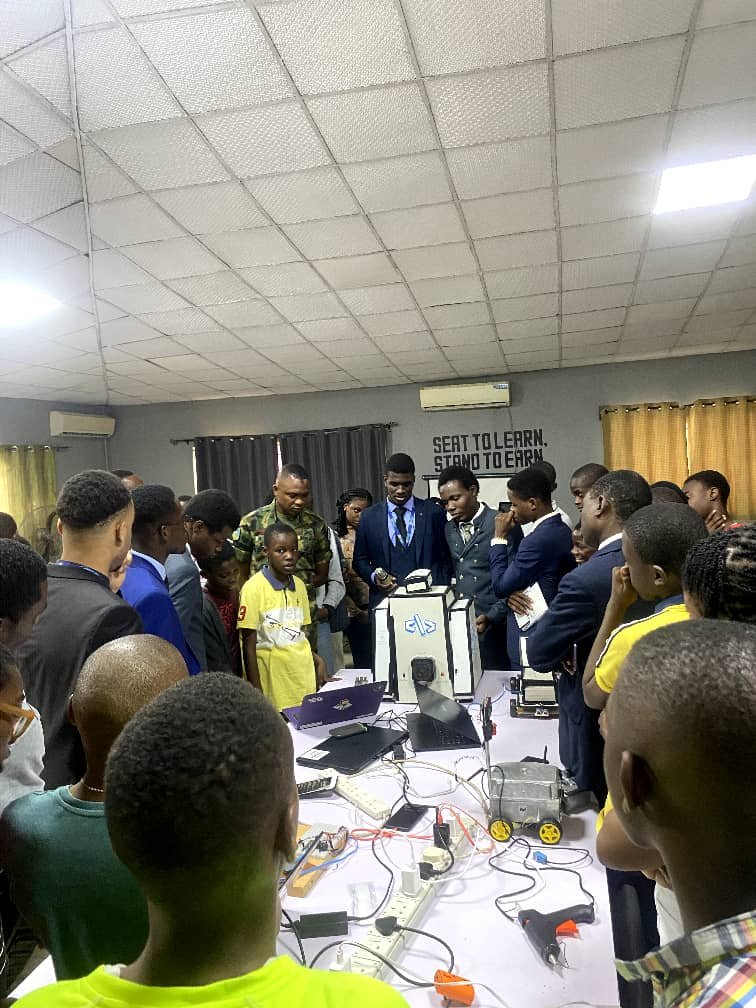
In 2024, our head of department asked our GDSC team if we could build a conversational AI robot, a receptionist robot basically, for the school. We said yes, split into a machine learning team and a robotics team, and that became our first real project as a chapter. It taught me that I could actually build the things I kept noticing needed building, like NaviaRide.
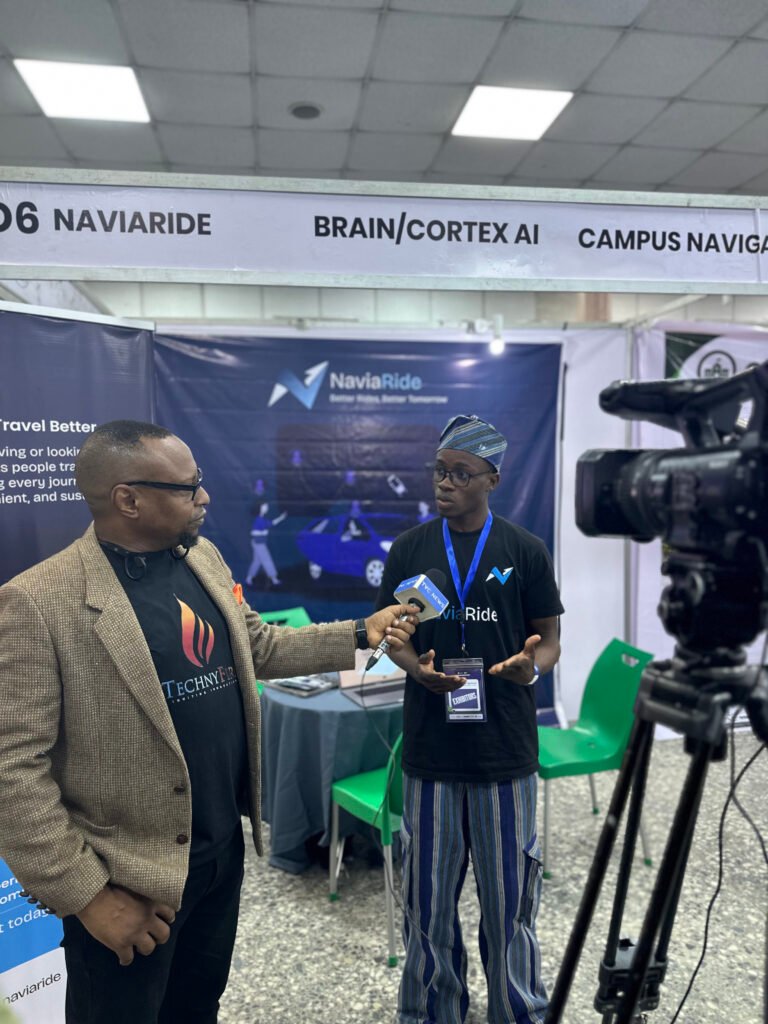
NaviaRide itself started with a Snapchat story.
A friend from university posted about carpooling with her friends to split costs, and around the same time, my now co-founder and I had both applied to YCombinator separately and both gotten rejected. He reached out about it, we got talking, and by December we’d agreed “let’s meet at the start of the new year and actually solve for something.”
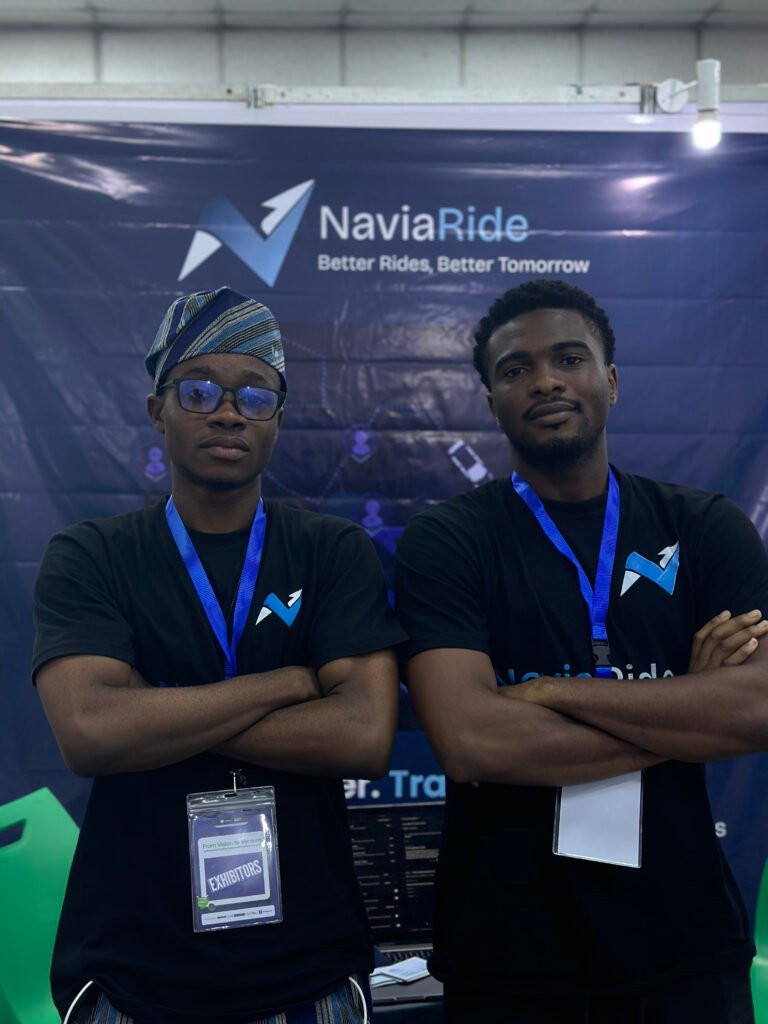
After brainstorming through a number of ideas, we landed on mobility. Not because nobody else was in the space, InDrive, Bolt, and Uber were all already there, but because none of them had ride-sharing built into their infrastructure the way we wanted to. None of them were solving the thing underneath all of it, trust. Nobody wants to get into a stranger’s car. That fear is the real product gap.
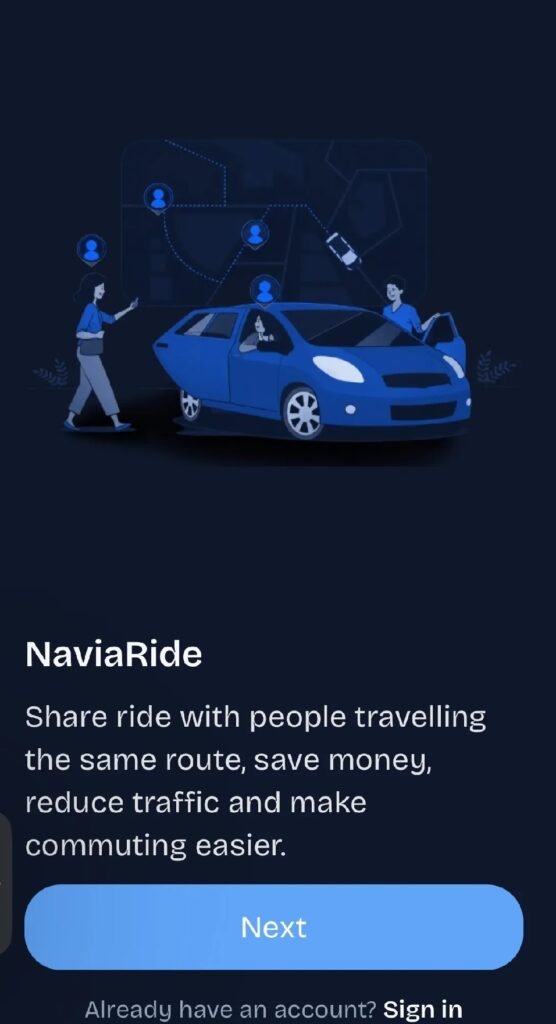
What we built lets someone already driving to work rent out the empty seats in their car to other professionals heading the same direction, cutting their own costs by close to 40 percent, while the person riding gets someone who’s been through a strict verification process, NIN checks, liveness checks, cryptographic hashing etc. So you can share your ride in real time with a trusted contact, calls stay inside the app so nobody’s phone number gets exposed, and there’s an option to ride with women only. We built it because I lived with the problem in Lagos, and then moved to Abuja and found out it was somehow worse. No BRT, no Bolt, just private cars and the constant risk of “one-chance.”
We’re in pre-launch now, waiting on app store approval, and most of the team helping us get there are GDSC alumni working for free, believing in something before it’s proven, because my co-founder and I can’t even pay ourselves yet.
Again, Mobility wasn’t the only thing that needed fixing.
Nigeria generates about 2.5 million tons of plastic waste every year. A lot of that ends up nowhere in particular, clogging drainages, flooding Lagos streets every July and August like clockwork, even though Lagos is a coastal city and shouldn’t have to flood every single year. Some of those Julys, the water found its way into my own house too, so this one isn’t abstract to me either. It’s become a culture that almost nobody questions anymore.
Plastic doesn’t decompose for hundreds of years, and when it finally breaks down, it just becomes microplastic, everywhere, forever.
Reloop AI, short for recycling loop optimized with AI, is our answer to that. With collection bins in every campus, every bank, every church and mosque and event center, there’s no excuse left for anyone.
Right now my focus is almost entirely on getting NaviaRide to market, because trying to do both with equal force is just brute force without precision. Reloop AI is next.
I talk a lot, even in my own content, about the difference between founders who build because they can and founders who build because something real needs solving. A lot of technical people fall into the first category, they have the skill, so they build, without ever checking if anyone actually needs what they’re making. We didn’t run any formal surveys before starting NaviaRide.
We built from what we’d already lived, the queues, the one-chance stories, my friend’s Snapchat post. My friends still tease me about it,
“Timi, when are you launching?” and I tell them the truth
“We’re pushing, as fast as we responsibly can, because the realities on ground don’t wait for perfect timing.”
Between a mobility app and recycling, that’s what being a changemaker has turned into for me. Not building because I can, but building because the problem already found me first, in a bus queue, in a stranger’s car, in a drainage pipe that floods every July.
There are days I ask myself what I’m actually doing, three jobs deep, holding a nine to five as a software engineer, then a five to nine running NaviaRide, and whatever time is left for Reloop AI. I keep coming back to the same feeling of knowing that what I’m doing is going to help people. That’s the part that doesn’t get tired even when I do. That’s the part that takes action when a problem finds you.